


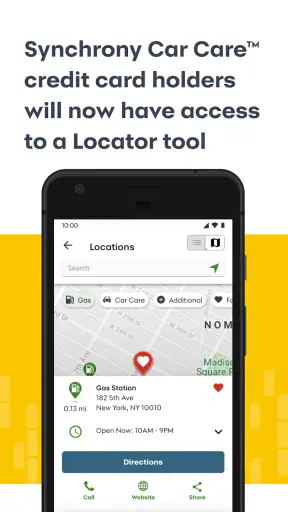
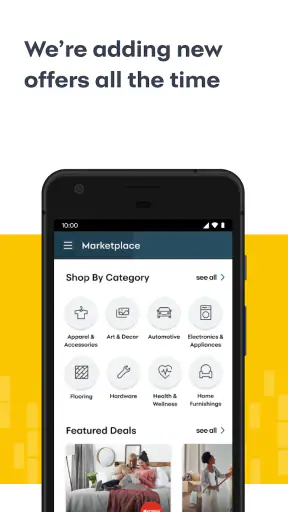
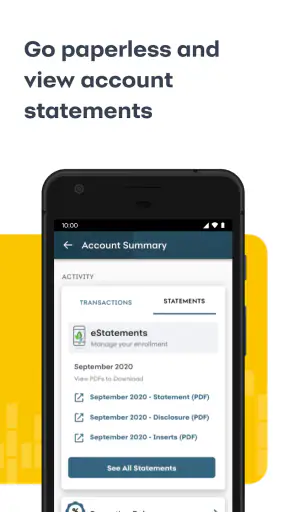
Managing a store account from a phone sounds simple until you need to check a balance, review recent activity, or make sure a payment has gone through while you are away from a computer. MySynchrony is built for that specific kind of financial housekeeping. I used it as a companion for Synchrony accounts, and my overall impression is that it works best when treated as a focused account-management tool rather than a complete personal-finance app.
The app is free, available for Everyone, and developed by Synchrony. It has been around since September 25, 2017, and its current version is 6.0.0 for devices running iOS or Android 11 and later. Its 4.5 average from roughly 69 thousand ratings and more than 5 million installs suggest that many account holders find the basic experience dependable. That popularity is useful context, but the more important question is whether its narrow purpose fits the way you handle credit and payments.
How I use MySynchrony for the everyday account routine
My normal workflow starts with opening the app when I want a quick account check rather than a full financial planning session. After signing in, I look first at the available account information, then recent activity, and finally any payment-related details that need attention. This order keeps the visit short and helps me avoid scrolling through unrelated material.
That focused flow is one of the app’s strongest qualities. A banking app may bring together checking, savings, transfers, cards, budgeting tools, and alerts from several products. MySynchrony feels more specific: I open it because I need to deal with a Synchrony account. For someone managing a retail credit account or several accounts connected to the same provider, that narrower purpose can be more convenient than searching through a broader financial app.
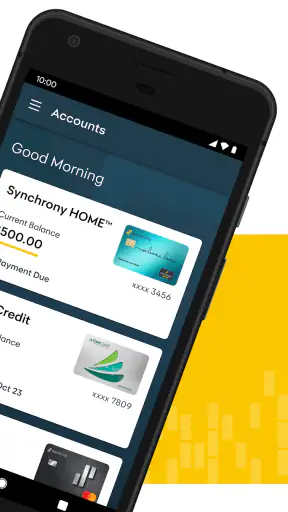
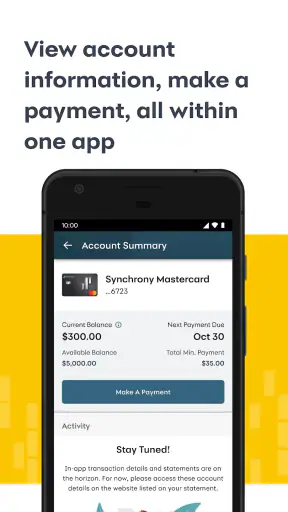
A realistic example is checking an account before making a purchase. I can open the app, confirm the current situation, review recent charges, and decide whether I need to make a payment or wait for a transaction to settle. I find this especially useful when I have made purchases at different times and want to distinguish a new charge from an older one. The app does not replace careful review, but it puts the relevant account information in one place.
I also use it after making a payment to verify that I completed the intended action. That habit matters because a confirmation screen and the account’s later activity are not always the same thing. I do not assume that every change appears instantly; instead, I check the available information and keep the confirmation details from the payment process until the account reflects what I expect. This is a small routine, but it reduces the chance of repeating a payment unnecessarily.
For people who only need occasional access, the app is still practical. You do not have to build a daily budgeting habit around it. A short visit before a due date, after a large purchase, or when reconciling a statement may be enough. The best use is not constant monitoring; it is having a direct route to the account when a specific question comes up.
One helpful distinction is between account management and money management. MySynchrony can be useful for seeing and handling the Synchrony side of your finances, but I would not choose it as my only tool for tracking spending across banks, cards, cash, and investments. If your main goal is a complete household budget, a dedicated budgeting app or your primary bank’s app will usually offer a broader view. If your goal is to manage a Synchrony account securely from a phone, this app is much more appropriate.
What I check before trusting the routine
Before relying on any finance app, I make sure I can identify the correct account and recognize the recent activity. This is particularly important if you have more than one Synchrony relationship. I read the account labels and transaction descriptions instead of assuming that the first balance I see belongs to the purchase I have in mind.
I also keep my login details out of notes, messages, and screenshots. The app’s value depends on secure access, but security is a shared responsibility. I use the device’s normal protection, avoid signing in on unfamiliar public devices, and close the app when I am finished with a sensitive task. These are not exciting features, yet they make the mobile workflow safer in real life.
Another practical habit is to compare the app with the statement or notice connected to the account when something looks unusual. A mobile view is convenient for a quick check, but a formal statement may provide the fuller context needed to investigate a disputed or unfamiliar charge. I would not treat a compact activity screen as a substitute for reading account documents when accuracy matters.
Settings and habits that make the app easier to live with
The first settings I pay attention to are the ones related to sign-in, device access, and notifications. I do not enable every alert automatically. Instead, I decide which notifications would genuinely help me notice a payment event or account change and which would simply create noise. The right balance depends on how often you use the account, but the principle is simple: alerts should prompt action, not train you to ignore them.
It is also worth checking the app after a phone update or a major account change. A finance app may remain installed while its sign-in state, notification behavior, or device permissions change. I make a short test visit rather than waiting until I urgently need to make a payment. That preparation is one of the easiest ways to avoid discovering a problem at the worst possible time.
Because the app requires Android 11 or later on Android devices, I would check compatibility before planning to use it on an older phone. This is a straightforward detail, but it affects people who keep an older handset as a backup. If your main phone is current but your backup is not, test the backup in advance rather than assuming it will provide the same access.
I recommend keeping the app updated through the official store on your platform. The current release is version 6.0.0, and staying current is sensible for a financial application, especially when you depend on reliable sign-in and account access. I do not update immediately before an important payment unless necessary; I prefer to update earlier, open the app, and confirm that everything still works as expected.
MySynchrony is free to download, which removes one barrier to trying it. That does not mean every financial action connected with an account is automatically free or that app access changes the terms of the account. I treat the app as an access channel, not as a promise about fees, interest, due dates, or account conditions. Those details belong to the account documents and payment information, which I read separately.
When I share a phone with family members, I am more cautious. A device may be convenient for quick access, but a shared login creates confusion about who viewed or changed something. I prefer each person to use the appropriate account access rather than passing around credentials. If you manage accounts for another person, clarify who is authorized before using the app to make account changes.
Small preparation steps that prevent rushed decisions
I keep a repeatable checklist for important visits: confirm the account identity, review recent activity, check the payment information, and save any confirmation in a secure place if I need a record. The checklist takes less time than correcting a mistaken payment or overlooking an unfamiliar transaction.
I also avoid making decisions based on a single number. A balance can be useful, but it does not explain every pending or recently posted event. I look at the surrounding activity and consider whether a transaction may still be processing. This is one of the most valuable habits for any account app because it prevents a quick screen from becoming an overconfident conclusion.
If the app does not show what I need, I do not keep refreshing indefinitely. I check whether the issue is a sign-in problem, a connection problem, or simply a question that requires the full account documentation or customer support. Repeatedly reopening the same screen rarely adds clarity. Knowing when to move to the next official channel is part of using the app well.
Faster patterns for repeat visits
Experienced use is less about discovering secret functions and more about reducing unnecessary steps. I keep the app easy to find, open it with a clear purpose, and decide in advance what I need to verify. A visit to check a balance should not turn into an unfocused tour of every screen.
For a payment routine, I use the same sequence each time. First I identify the account, then I review the relevant activity, then I complete or verify the payment, and finally I record the confirmation if the transaction is important. Repeating that order makes mistakes easier to spot because I know what information should appear at each stage.
For a transaction-review routine, I start with the newest activity and work backward only as far as necessary. If I am checking whether a recent purchase appeared, there is no benefit in reading months of history first. If I am reconciling a statement, I slow down and compare entries carefully rather than relying on memory.
Another useful pattern is separating routine checks from problem-solving sessions. A routine check may take only a moment. A suspicious charge, unexpected balance, or payment question deserves more time and possibly a different support route. Mixing both situations can lead to rushed action, especially when the app presents a convenient button before I have fully understood the issue.
I would also avoid using a third-party finance dashboard as the only place to confirm Synchrony activity. Aggregators can be excellent for seeing multiple accounts together, but they may refresh at different times or present less detail than the account’s own app. MySynchrony is the better first stop when the question concerns the Synchrony account itself; a broader dashboard is better for seeing how that account fits into the rest of your finances.
For households with several accounts, I make the account-selection step deliberate. I do not assume that the last account viewed is the one I intend to manage. This is an easy mistake to make when switching between related accounts, and a few seconds of checking the label can prevent a payment or review from being applied to the wrong place.
Where the convenience has limits
The app’s focused design is also its main limitation. It is not the right choice if you want a unified picture of every financial institution, automatic category-based budgeting, investment tracking, or detailed cash-flow planning. Those needs call for a broader financial tool. MySynchrony is strongest when the account itself is the subject, not when it is one small piece of a larger financial system.
I would also skip relying on it as the sole record for important financial history. Mobile access is convenient, but I still keep statements, confirmations, and relevant correspondence in an organized place. If I need to explain a payment or investigate a transaction later, the app can help me begin, while the account’s formal records provide the more durable reference.
People who rarely use mobile apps may find the sign-in process more effort than visiting a website, particularly if they only need access once or twice a year. In that situation, the best option is whichever official channel you can use accurately and securely. The app is valuable because it is convenient, not because every user must manage an account through a phone.
Advanced limits and sensible expectations
Financial apps reward caution. A screen that loads quickly can create the impression that every account event is final and current, but account activity can involve timing differences. I pay attention to whether information represents a posted event, a pending event, or a payment that still needs time to appear. When the distinction affects a decision, I verify it through the account’s detailed information rather than guessing.
I am similarly careful with unusual activity. If I see a charge I do not recognize, I do not make a random payment or immediately delete the app. I capture the relevant details securely, review the account information, and use the official support process associated with the account. The app is a useful starting point for identifying the issue, but an investigation may require more than a mobile screen.
Connectivity is another practical boundary. A phone app cannot be a dependable solution if you have no access to the network at the moment you need it. I plan important payments before the last possible moment and avoid assuming that a weak connection will be enough. This is especially important when traveling or using a device that changes between mobile data and Wi-Fi.
Privacy also deserves a realistic view. The app is designed for secure account access, but the safest workflow still includes a protected device, careful handling of credentials, and attention to where notifications appear. If sensitive previews show on a lock screen, I adjust the phone’s notification behavior. That small setting can matter when the device is visible to other people.
The age rating of Everyone makes the app broadly accessible from a store-classification perspective, but account responsibility is a separate issue. I would not hand over account credentials simply because the app is suitable for a general audience. The person using an account should have the proper authorization and understand what a payment or account change does.
In my experience, the best advanced technique is knowing when not to act. If the balance, activity, and payment status do not line up, I pause. I do not submit a second payment just because the first one is not immediately visible, and I do not dismiss an unfamiliar charge because the amount looks small. A focused app gives you fast access; good judgment determines what you do with it.
My verdict after building a repeatable routine
MySynchrony makes sense for people who want a direct mobile way to manage Synchrony accounts without turning the task into a full budgeting project. I like its focused role, free access, and suitability for quick checks, payment routines, and reviewing account activity from a phone. The strong average rating and millions of installs also show that it has reached a substantial audience, although popularity should not replace checking whether it matches your needs.
My recommendation is strongest for an existing Synchrony customer who checks an account regularly and values convenience. I would install it, confirm that the device meets the Android 11 minimum when relevant, configure only useful notifications, and establish a simple verification routine before important payments. Those steps make the app more dependable than opening it only when something has already gone wrong.
I would recommend a different type of tool for someone seeking complete financial organization. A primary bank app may be better for everyday banking, while a budgeting service may be better for combining accounts and analyzing spending. MySynchrony should complement those tools, not pretend to replace them.
The final trade-off is clear: you get a specialized account companion rather than an all-purpose financial command center. For me, that specialization is a benefit when I need to handle a Synchrony account quickly. It becomes a limitation only when I expect the app to explain my entire financial life. Used within its proper boundaries, it is a practical, focused choice for mobile account management.
My final advice: use it for clear, repeatable tasks, read the activity instead of trusting one number, and keep formal account records for anything important. That approach gives the app room to be convenient without asking it to do a job it was not designed to do.


